Just browsing Tom Biebrach's Pencoed Geography site, and came across this little Earthquake widget which you can get by clicking the link through to myeqwatch: Earthquake Watch.
Posts
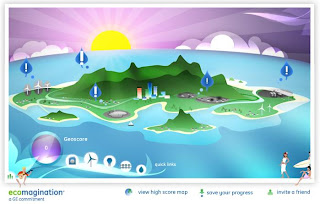
Geography and Electricity General Electric: an American energy company have a nice site called GEOTERRA which is aimed at exploring ideas of renewable energy by providing a series of FLASH games on an island, which explores issues to do with energy conservation such as blasting air at windmills and steering trains around a route. Geography and Chocolate Certainly eaten a lot of it in the last 10 days or so... Charlie and Lola are a favourite of my kids. Was just browsing Amazon for some sales bargains, and found this new book, which is due to be published in February 2007, when it will cost £2.99 - you can pre-order now. Could be a good resource to use as a prize for younger geography students. Why not order several copies at that price... The book is to raise funds for COMIC RELIEF . There is going to be a RED NOSE DAY on the of March 2007, and the site is already up. You can download a set of excellent Interactive Whiteboard resources: 5 FLASH files which would make great sta...

I look like a celebrity... Get me out of here ! Thanks to Tony Cassidy for putting me on to this interesting little website tool. Check out Tony's look-a-likes then mine... Worrying that Rupert Murdoch is 75 years old ! Who do you look like ? The one I'm really pleased about is Svante Arrhenius He sort of 'discovered' the greenhouse effect, so big up to Svante. Which reminds me that one of the highlights of my Christmas Day was watching " Ice Age 2 : the Meltdown" - loved the sequence with the Sid Cult...

RSS FEED now available One of my Christmas projects has now been completed! You can now subscribe to an RSS FEED for this weblog. There will be an icon on the right hand side of the screen... There will now be a short Christmas intermission.... Cheers! ...and thanks to Victoria for the very nice home made card. Merry Christmas !


Time Magazine's Person of the Year . This year, the winner is.... ME! And anyone else who has used the Internet to create and share content... Congratulations to us all. Read the story HERE. Also, don't forget to set your alarm clock for 6.30am on New Years Day Gift of a Goat Monday 1 January 2007 6:30-7:00 (Radio 4 FM) Ethical gifts of goats to help poor African families have become a popular Christmas present. But what happens to the animals and the people who receive them? Hermione Cockburn visits Uganda to see a goat scheme in action. She investigates the challenges of keeping the animals healthy and well looked after and discovers just what it takes to ensure that new goats help rural communities struggling to find a way out of poverty. and then stay tuned for TODAY, from 7am - 9am, presented by the G Team. Visited the website just now and discovered the Museum of London's rather nice "My London" Emotional Map of the capital. Why not check out ...

SlideShare Slide Share is a website which allows the sharing (natch) of Powerpoint presentation slides. They can then be viewed and embedded into websites and blogs (as you can see below...) The slide show above was shared by staff at BUSHLOE High School . Also good to see a few more SLN regulars getting the blogging habit. More on this shortly...

Christmas Cards Did you know that on average we receive (and possibly throw away) 17 cards each on average - that's over 100 million cards. The Woodland Trust offer a recycling scheme, and there are posters that you can download for use in your school. I always arrange a collection in the Geography Department and then take several thousand of them in one go to Tesco to reduce the carbon footprint of the school (allegedly) Why not organise a local collection, and perhaps publicise it ? Also came across the Christmas Song Generator from Generator Blog So here it is, merry Christmas, Everybody's having fun. Look to the geography now, It's only just begun. Merry Christmas from the Christmas Song Generator . Get your own song :
Geography Cup in the News Dan Raven Ellison and the Geography Cup are in the News... The competition, which runs until New Year's Eve has been featured in a YAHOO news article. Nice one! BETT Article published My latest piece of journalism: an article for the Educ@Guardian's BETT Supplement was published this Tuesday. Have been waiting for an online version to link you to, and they are now online. HERE is the general page for the supplement. And HERE is my humble contribution, which begins below: Bring maps to life and save the world Treasure hunts, electronic mapping, sustainable development, and exploring Britain through panoramas Alan Parkinson Tuesday December 12, 2006 Guardian Geography is a subject looking to the future, giving students skills to interpret the world of tomorrow. Geographical information - its collection, analysis and presentation - is another strong theme as schools are encouraged to use the best technology. Famous for 15 seconds again... More good new...
KFC St Petersburg

KFC St Petersburg Originally uploaded by annesImages . Test posting from FLICKR Group: Geography Teacher Resources Image from annesimages

"Oh what a night ! Late December back in '63..." Of course Frankie Vallie wasn't referring to the main event: I was born then... He wasn't referring to the inclement winter weather either. The winter of 1963/4 was the coldest and winteriest ever! Now this has been celebrated in a new book written by Ian McCaskill and Paul Hudson , and with a nice tagline "when winters really were winters". It looks at the winters of 1947, 1963 and 1979, which were particularly hard winters. Some great images and details. This book would make a perfect gift for the Geographer in your life. Hint ! A good SCOTSMAN interview here.

Are you a Collaborator or an Isolator ? Click the image above to get a larger view. Now read the description - which are you most like ? I can confidently identify myself as a collaborator. This could also be shown on a continuum with the two types at either end. If you're an isolator at the moment, what could you do to become an isolator ? Why not begin by starting a blog of your own! Thanks to Quentin d'Souza for the use of his diagram which he posted on TEACHING HACKS. Let's all aim to be more collaborative!
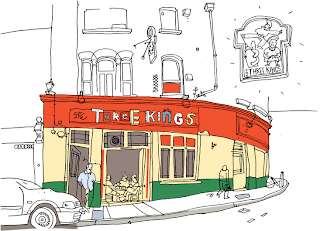
I have been following the current journey of artist OLIVIER KUGLER which is being printed in The Guardian. He is one of my favourite illustrators - his work has a great 'sense of place', and he has the knack of identifying the key aspects of a location, or a person that he has interviewed. His travel journal is great. He has an online portfolio from which I've borrowed the image below (which I will, of course, remove if there is a problem...) This gives you an idea of the style of the work, and there is an illustrated biography HERE . Check out his work.

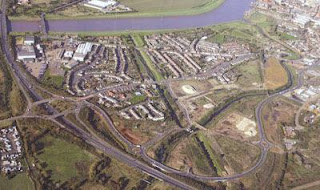
All change The Geography and all that Jazz Blog has moved to BETA BLOGGER. Been an interesting week as I made contact with some developers who are buiding a Millennium Community in South Lynn, King's Lynn Do you recognise this place ? ( Image copyright Morston Assets ) On the way into work today, I was queueing as usual by the White Horse in Gaywood waiting for the lights and the poster board by the River Lane Fish Bar contained a large advert for YOURS SOUTH LYNN, offering the chance to "Move in for just £99" and houses from £99,950. It refers to a new community I mentioned in my previous post (scroll down to read it) Click the image below to be taken to the website shown... Website images copyright Yours South Lynn The night before I'd attended a public meeting at Hunstanton Town Hall, where I was one of just 3 people to turn up on a blustery night to hear about the new Millennium Community which I posted about a few days ago. I chatted to Tom Harrison, Chief Execu...


Just been writing an article for the new e-magazine which is going to be launched in January 2007 called "The Global Geographer", and I've found myself referring back frequently to the work of an American author called Barry Lopez . I've been following his work for well over 20 years ! He is most famous for a book called "Arctic Dreams". In a book called "Crossing Open Ground", in a piece called "Landscape and Narrative" he talks about the idea of MY PLACE, and ends "the shape of the individual mind is affected by land as it is by genes" His most recent project is one called HOME GROUND . I've also found an article which I clipped out when it was published by another great author I mention: Robert MacFarlane, who produced a piece for the Guardian on Barry Lopez. It ends with this paragraph: Global warming is now depleting Arctic summer sea ice at a rate of 10% per annum. A plausible consequence of this depletion is that pol...

Geography and Isobars Image Copyright: BBC - visit http://www.bbc.co.uk/weather for the latest forecast ! An isobar is a line joining places which are experiencing equal atmospheric pressure. Last night was a very windy night down in Norfolk, and across most of the country - the synoptic chart above is for mid-day today, but yesterday's chart showed the classic pattern of a mid-latitude depression. The sycamore tree in my garden lost all the leaves it had been clinging on to, and bushes were tapping against the windows. On the way home from a fancy dress party, my Noddy Holder hat blew off and I ended up in someone's front garden chasing it round in a gyre... Of course the storms were nothing compared to the problems created by the weather in the Philippines. See this BBC NEWS article for more on the effects of Hurricane Durian. Interestingly, durian is one of the top search phrases on Google for leading people to GeographyPages - not sure why... Geography and Music (Cont.....

Geography and Countryfile Countryfile is one of those programmes you might not have watched. It's on Sunday mornings, and actually contains a lot to interest geographers (although the G word is seldom mentioned) This week, the team visited North West Norfolk and there was a great sequence with a pink sunrise and thousands of geese rising off the marsh and moving inland. There were visits to Titchwell and Abbey Farm , who deliver organic vegetable boxes in my local area. One of the interesting aspects was the possible changes that may take place. The EU are reducing the subsidies that they pay for the growth of sugar beet. At the moment, sugar beet is supported by the EU, and is a high-energy food for the geese. If farmers grow something else, it will probably be a spring crop, and the farmers will have to scare the geese off the crop. Most farmers are very happy for the geese to be on their land at the moment, but this could change. There's an interesting OXFAM document whic...
Geography and ICT (Cont...) You'll remember (perhaps) an earlier posting related to an article in the Guardian by Phil Beadle on the usage of ICT in schools. I came across a posting via Peter Ford's blog on the response by Gareth Davies to this article. This led me of course to explore Gareth's excellent blog, which had this post about how some schools are turning off wireless networks due to parental safety concerns ? what next ?
Geography and YouTube This will not be viewable if you're looking at this at school as it's filtered out. It's a video made to accompany a track by Eric Prydz and featuring a sample from Pink Floyd's "Another Brick in the Wall" - some good parkour and a message at the end - and all in moody black and white to save colour... Thanks to Tony Cassidy for bringing it to my attention. UPDATE Just a few hours after that video was posted, Ollie Bray brought another video to my attention. This one features the same music track, but different images.
Geography and Levels That old question has been debated on a recent thread on the SLN Forum. Should we be levelling / can we level ? individual pieces of work... Here is the response on this from David Lambert. He is Chief Executive of the Geographical Association, but this is his personal view. I think he has it spot on! Thanks to Christine Lloyd Staples for starting the thread. I am writing in a personal capacity on this one … Sorry, it is quite long! As a result of the KS3 Review, the PoS for geography will look quite radically different. The current proposals will be published in full in the January 2007 issue of Teaching Geography (it is not too late to subscribe by joining the GA – do spread the word!!). The PoS will be accompanied by commentaries from David Gardner, Di Swift and myself. The changes to Level Descriptions are unlikely to be very far reaching. Though the way geography is expressed in the PoS is different (for good reason), the geography pretty well remains intact, ...
Geography and Whisky Those of you who read the blog regularly will know that I like a nice single malt of an evening… Read today in the Times about the auctioning of what is supposed to be the oldest bottle of whisky in the world. The bottle is a Glenavon whisky, bottled in Speyside between 1851 and 1858 and was sold for £14,850 No ice for me please...
Geography and Weblogs A nice mention for the GeoBlogs project on Tony Cassidy's weblog. "There are a number of Geography blogs springing up at the moment, I find reading blogs a useful tool for professional development, for student readers its a great way of gaining a little extra knowledge and to see what other students are doing. Why not set up your own personal blog? It doesn’t have to be about Geography… Most of us are indebted to Alan Parkinson , Mr P of GeographyPages fame, I believe he lead the way, his original Geoblog and links to other interesting examples are here . I remember when I started teaching, there were few very good geography sites on the web and Alan’s was like a little flame in a very dark cave."